
Work in Progress
Why Rejection Isn't the Worst Thing (even though it feels like it is)

Any writer who has thrown themselves into the (shark tank) submission process knows it can be a soul-deadening affair.
“It’s a business,” I tell clients (and myself). “Try not to take the rejection personally.”
But it feels personal—no matter how long you’ve been doing it, no matter how many times you tell yourself to just dust off, pick up, try again.
You’ve probably worked on your manuscript for at least a year, if not longer. These are characters and ideas that you care about, that you’ve thought deeply about, agonized over, bonded with. They feel like they’re you—and they are, in some important way. If we’re creating honest work, it means we’re putting ourselves into it. Of course we are, otherwise it would feel generic and dull.
I hate to quote from Instagram, but I’m going to boldly do it here because I read a post a few months ago that stuck with me: no matter what happens, if you respond with the word, “Good,” you’re automatically using the experience as a way to learn and get better.
Your editor told you your novel wasn’t ready yet for prime-time viewing? Good. They saved you from sending it out too soon and burning bridges prematurely.
No one’s requesting the full manuscript based on your query and sample pages? Good. That’s feedback. It means something isn’t landing and needs attention. Go back and take another look.
So if rejection isn’t the worst thing, what is?
Not trying. Doing nothing. Giving up because it’s hard, or because people have said no to you, or because you think your work is no good.
Here are some statistics for you:
· It took Agatha Christie five years to find someone who would publish her novels.
· The Chicken Soup for the Soul series (okay, not a personal favourite, but hear me out) went to 140 publishers before it found a home.
· “Nobody will want to read a book about a seagull,” one editor told Richard Bach. Jonathan Livingston Seagull ended up selling forty-four million copies.
· A Wrinkle in Time was rejected twenty-six times, The Time Traveler’s Wife twenty-five times, and The Help sixty times.
The ‘100 rejections’ strategy
I wish I could say I came up with this, but it comes from Kim Liao who suggests aiming for 100 rejections in a year. It’s actually harder than you’d think, because once you start sending out enough work to actually get 100 rejections, you’ll also start getting acceptances.
It turns out, part of the reason you might feel like you’re getting rejected a lot is because you’re not sending out enough work. If 10/10 of your submissions get rejected, that’s rough. If 80/100 get rejected… that’s 20 acceptances.
I’ve started making this an annual target, and I include anything that involves me putting myself out there as a writer in some form and making myself vulnerable. This means not only sending out work but also applying to residencies and conferences, asking bookstores to stock my books, asking to do guest blog posts.
Is it hard? Yes. Is it a good thing? Also yes.
The solution to rejection
If you’re getting rejected over and over, there’s one tried and true solution that I know of: keep writing. Keep reading. Keep learning. As I have said often, there will never come a time when I will know all there is to know about writing. I learn something from every manuscript I write and from every one that I edit. Sometimes it’s the same thing over and over because I can be stubborn.
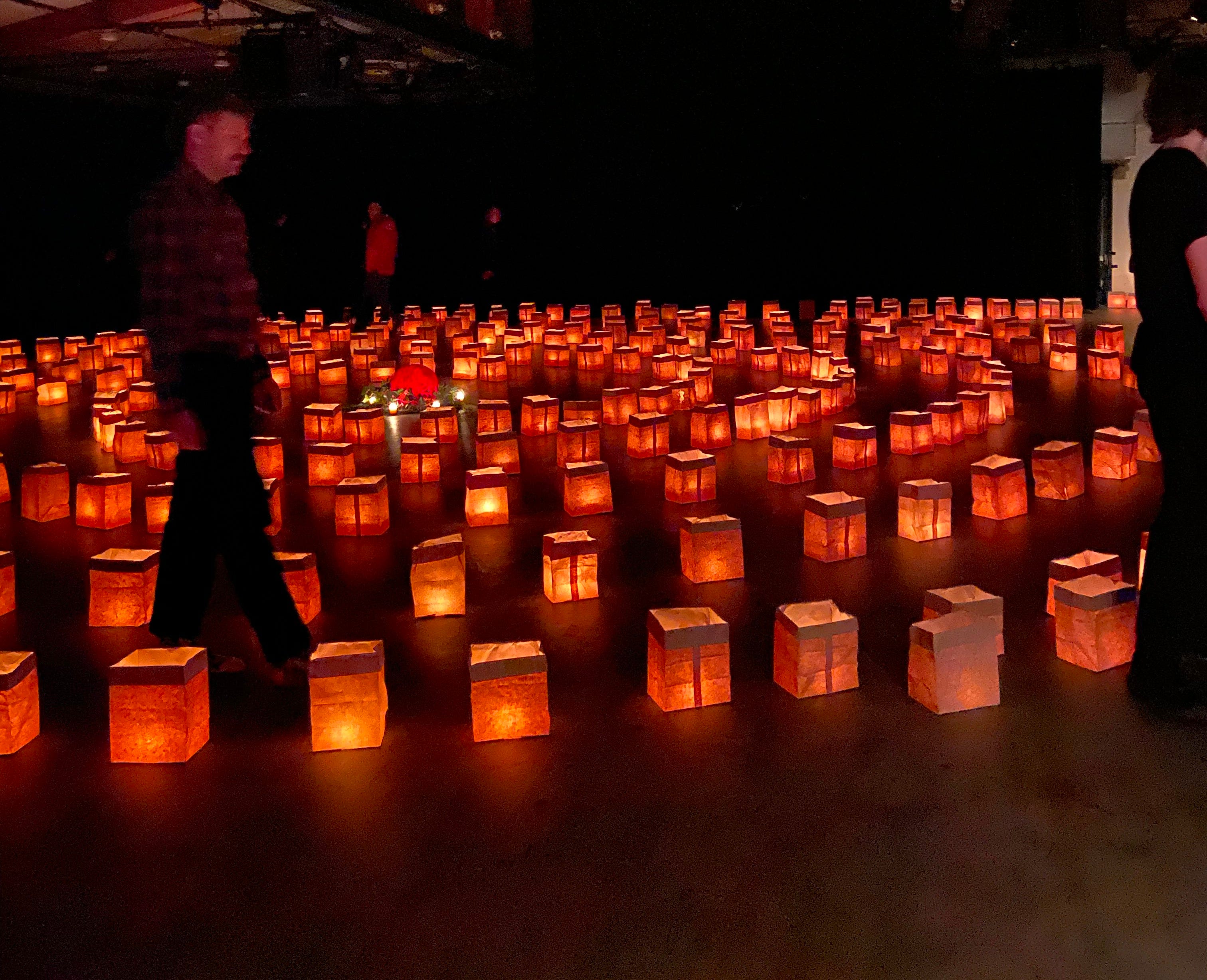
I’ll leave you with a photo from what has become for me a wonderful Winter Solstice tradition: the Labyrinth of Light, put on by the Secret Lantern Society in Vancouver. Over five hundred candles are arranged in a spiral. The idea is that you enter the labyrinth letting go of all the things that happened to you that year. In the centre, you pause and reflect. Then, on the way out, you open yourself to what the new year might bring and, if you’re so inclined, set an intention for the year.
Let go of the bad and stay open to the good!
