
Work in Progress
Summers Are for Reading

I’m a person who loves lists—and since I also love books, I love lists that involve books: best fiction, top 100 classics of all time (depending on whom you ask, of course).
Because I’m a writer, I’m also a strong believer in learning by reading—both good books and bad ones. There are many, many quotes from famous writers about the value of reading for improving your writing, but here are a few of my favourites:
“If you don’t have time to read, you don’t have the time (or the tools) to write. Simple as that.”
— Stephen King
“Read, read, read. Read everything—trash, classics, good and bad, and see how they do it. Just like a carpenter who works as an apprentice and studies the master. Read! You’ll absorb it. Then write.”
— William Faulkner
This past Saturday, the New York Times came out with a summer reading challenge. In case you’re not a subscriber, here is the gist of it:
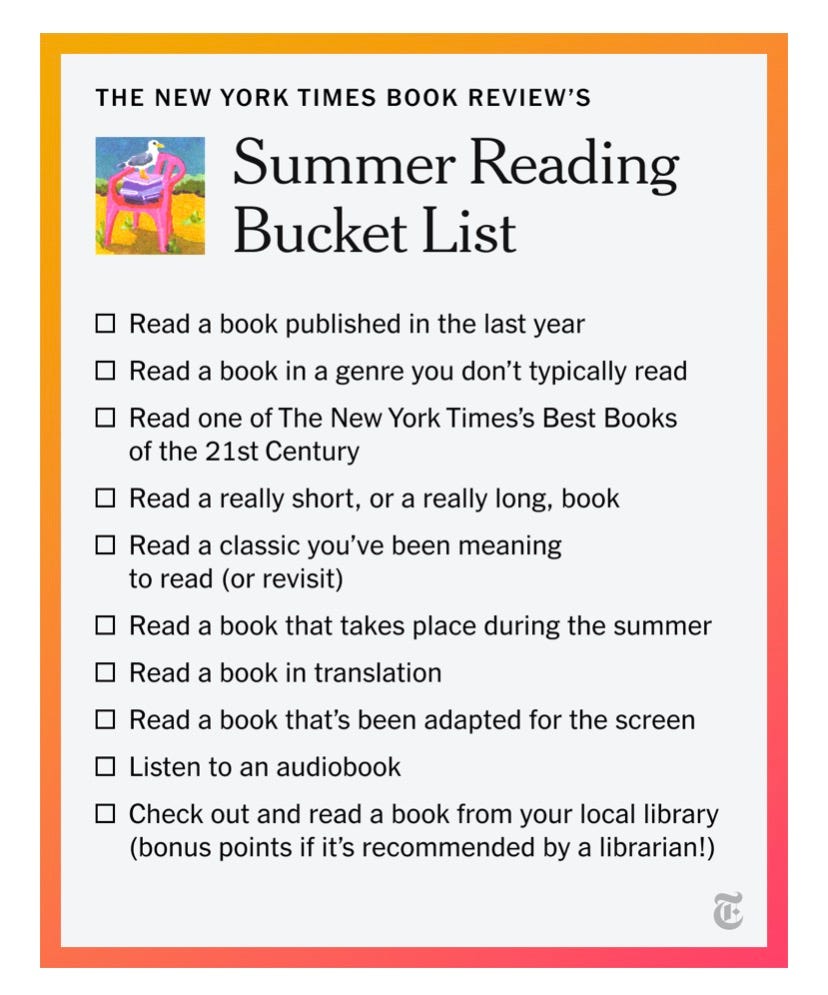
I love challenging myself to read outside my comfort zone. I’ve often been surprised by how much I enjoy books I would never otherwise pick up.
If you’re a writer, you will likely read differently than other people (or you should). If I’m studying a book, I will always read it twice: the first time to enjoy it, the second time to take it apart and see what makes it tick. I cannot overstate the value of this type of deconstruction—and if you’re interested in seeing how it’s done and why it’s valuable, well, my colleague David Griffin Brown and I have done it with twenty-one classic novels.
For any writer who wants to understand how structure works and why it’s important, deconstructing a novel is the way to do it. It’s harder than it looks, but you’ll learn more from this exercise than any theoretical summary can teach you.
So, if you’re a writer who loves lists like me, here’s a summer reading challenge I’ve put together especially for fiction writers:
Read a book that is way outside your genre or comfort zone (I’m guessing for most people this will be poetry).
Read one of your comps (yes, I’m looking at all you writers who chose your comps off a Goodreads list but haven’t actually read them).
Read a craft book you’ve been meaning to pick up. Want a recommendation? Look no further. At the back of our book we also include a list of our favourite craft books.
Read a classic you know you should have read but haven’t. Classics are classic for a reason. If you’re feeling ambitious, I highly recommend Middlemarch.
Listen to an audiobook. Try to choose one that isn’t read by the author, because while we think we can do a good job reading our own work, the truth is voice actors do it better.
Buy and read a book written by a local author—and leave them a review. Reviews for authors matter way more than most people realize.
Read a collection of short stories.
Find your favourite author’s first published novel and read it. We all start somewhere.
Read a book that was adapted into a movie you love. Compare the page to the screen to see what got cut and why.
Judge a book by its cover. Choose something at the library based solely on the beauty or intrigue of its cover.
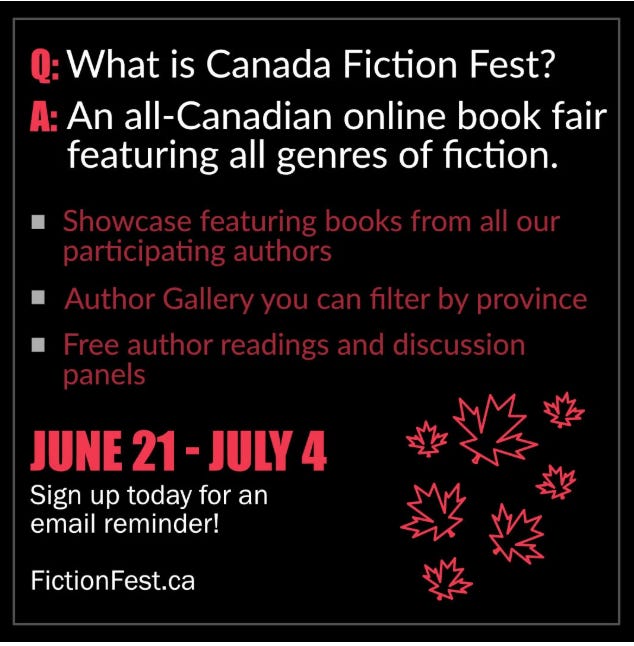
If you want to be exposed to some new Canadian authors, consider checking out the Canada Fiction Fest:
I will leave you with a post I wrote a few years ago about reading deliberately and how important it is for writers to absorb what they’re reading and think about why it works (or doesn’t).
Enjoy good books! Let me know what you’re reading.
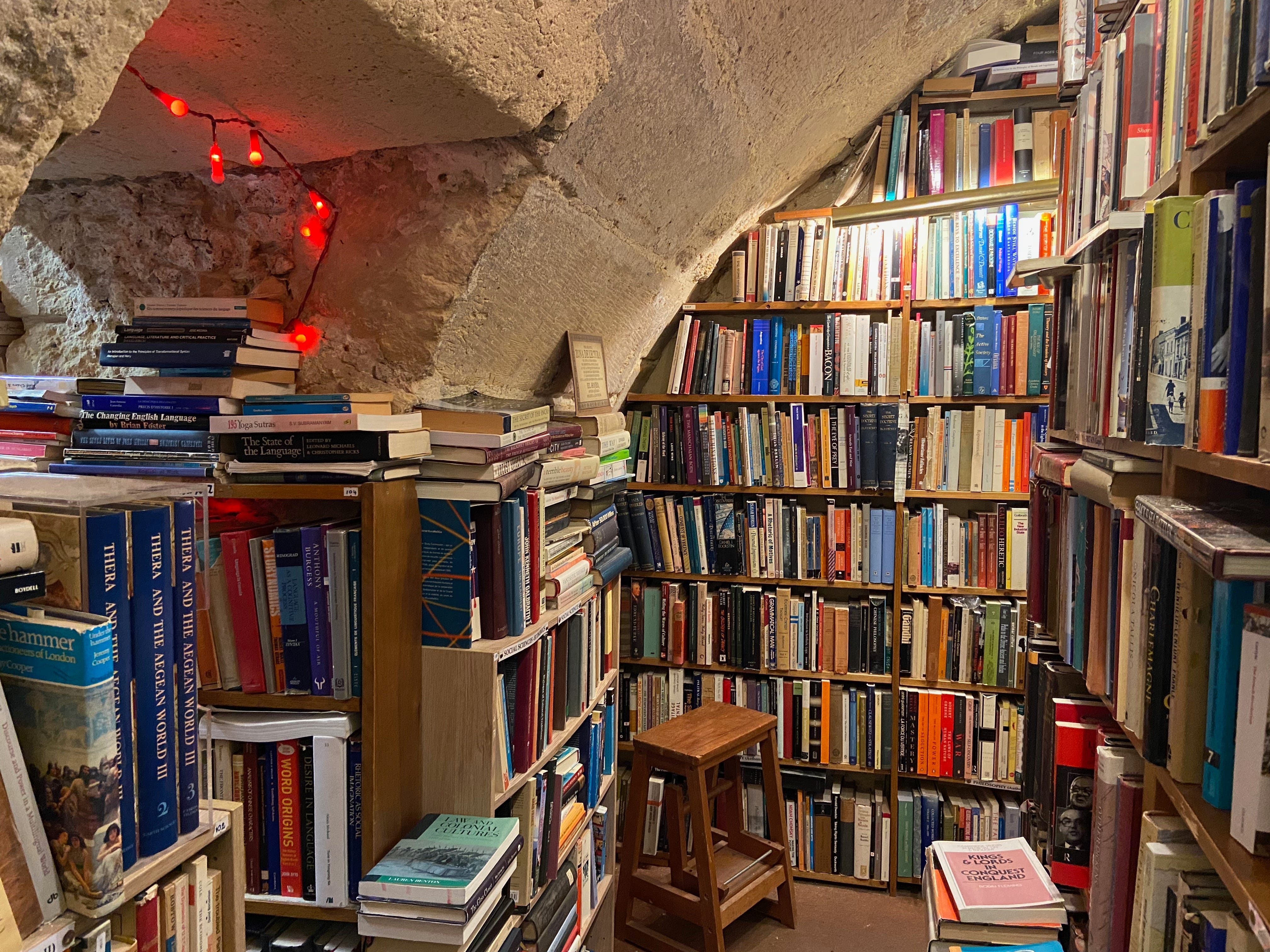
This photo comes from my favourite bookstore in Paris: The Abbey Bookshop.
What I’m reading right now: The God of the Woods, by Liz Moore. So far, it’s an excellent thriller and a great lesson in managing multiple points of view.
What I’m listening to: Scarcity Brain, by Michael Easter. I loved The Comfort Crisis. This one is just as good.
