
Work in Progress
Writers Who Walk

Literary history is full of writers who swore by walking as a way to enhance creativity or solve a knotty problem. As Nietzsche put it:
“All truly great thoughts are conceived while walking.”
Nietzsche used to walk two hours a day and always carried a notebook. Stephen King apparently walks three miles before he starts his writing day. Wordsworth wrote most of his poetry while wandering around the Lake District. Thoreau claimed to walk a minimum of four hours a day, and Dickens walked through London at night, anywhere from twelve to thirty miles at a time.
That’s a short list of all the writers who walk—and it’s not just writers. Einstein, Tesla, Darwin, Jobs—all were committed walkers.
Walking and creativity
There’s a connection between physical activity and increased creativity. A Stanford study done back in 2014 confirmed that walking enhances creative thinking by 60%. Apparently it doesn’t matter if you’re indoors or out, in the middle of the city or on a forest trail: just get up and move around. Walking makes you more creative, particularly when you’re trying to generate new ideas.
And not just walking…
How many of us get our best ideas while in the shower? Or driving? I’ve had to pull over numerous times to make notes on an idea I had in the middle of traffic. I’ve been at a concert and suddenly—apropos of nothing—I knew what I needed to do with my novel or spotted a connection in a project that had eluded me.
“Some of the best ideas I get seem to happen when I’m doing mindless manual labor or exercise. I’m not sure how that happens, but it leaves me free for remarkable ideas to occur.”
— Chuck Palahniuk
This is not the writing gods cursing us with great ideas when they know we probably don’t have our notebooks handy. When you put yourself in a situation where the mind is allowed to wander, it will take you to some unexpected places.
The boys in the basement
Often, banging your head against a persistent creative problem is not the best way to solve it. We need to trust our subconscious—the boys in the basement, as Stephen King calls his—to do the work. Sometimes that means sleeping on a problem or literally walking away from it. Several times I’ve gone to sleep with a problem in my novel and woken up with the answer.
"…you have to be willing to let the boys in the basement do the heavy lifting while you're asleep or while you're doing something else... If you can do that, the guy with the cigar and the little wings has got a bag of magic."
— Stephen King
Ray Bradbury, Dorothea Brande and Julia Cameron all suggest writing when you first wake up to gain access to whatever business the boys in the basement got up to while you were sleeping. I would add writing after a long walk. Just sit down and write whatever comes to mind. Don’t worry about grammar or spelling. Don’t even worry if it makes any sense. Just keep the hand moving.
Try this:
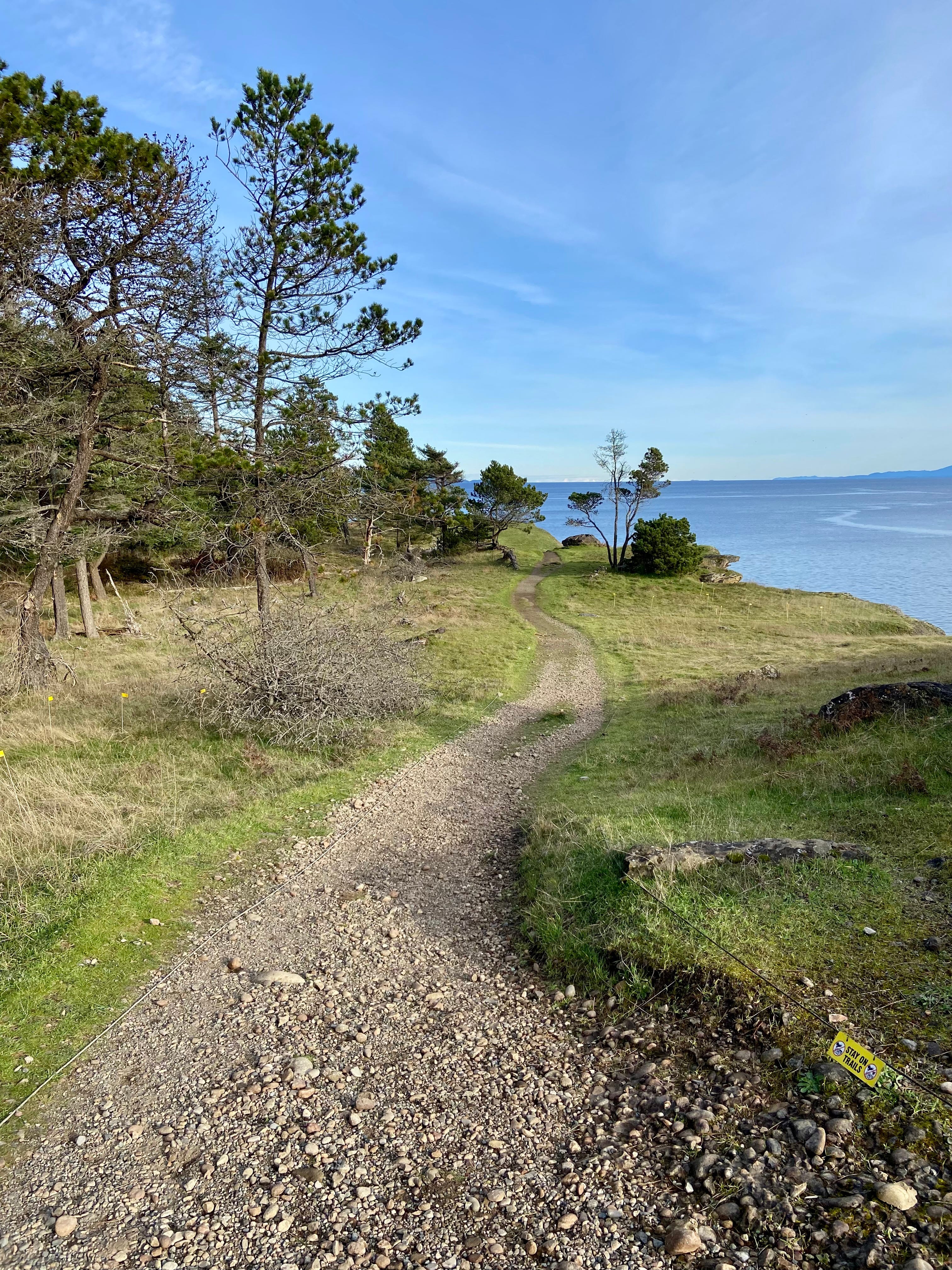
The next time you’re stuck on a creative project, get up and walk away from your desk. Go out for a walk, alone—no headphones, no destination. Don’t even set yourself the task of solving the problem. Don’t weigh down the walk with any expectations. Just go, see what happens and let me know!
What I’m reading right now: The Secret History of Audrey James, a great historical novel by Canadian author Heather Marshall using dual timelines: Germany before and during WW2, and 2010, Northern England.
